

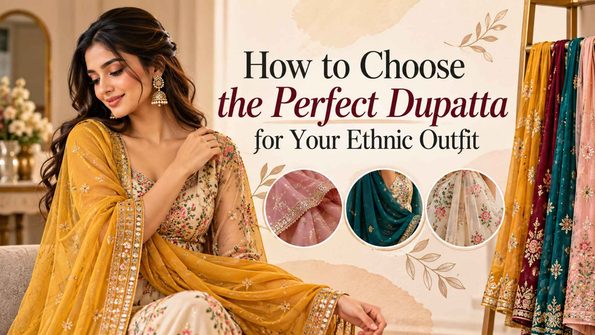
A dupatta may look like a simple part of an ethnic outfit, but it can completely change the way your entire look feels.
The right dupatta can add colour to a plain kurta, make a simple suit look festive, create contrast, or bring together different elements of your outfit. Sometimes, you don’t even need a new kurta set—a different dupatta is enough to create a fresh look.
Here are some simple ways to choose the perfect dupatta for different ethnic outfits and occasions.
1. Pair a Heavy Dupatta With a Simple Suit
One of the easiest styling combinations is a simple kurta set with a detailed dupatta.
If your kurta has minimal embroidery, try pairing it with a dupatta featuring:
- Embroidered borders
- Traditional motifs
- Mirror-style detailing
- Printed patterns
- Decorative work
This keeps the outfit balanced while giving the dupatta space to become the highlight.
2. Keep the Dupatta Simple With Heavy Embroidery
If your kurta or Anarkali already has detailed embroidery, you don’t necessarily need an equally heavy dupatta.
A lightweight dupatta with a subtle border can complement the outfit without making the overall look feel too busy.
The idea is to let the main outfit remain the centre of attention.
3. Try a Contrasting Colour
Your dupatta doesn’t always have to match your kurta.
Contrast can make a simple ethnic outfit much more interesting.
Try combinations such as:
- Yellow kurta + pink dupatta
- Ivory kurta + maroon dupatta
- Green kurta + peach dupatta
- Navy blue kurta + light blue dupatta
- Pink kurta + green dupatta
- Black kurta + gold-toned dupatta
Experimenting with contrast is also a great way to reuse clothes already in your wardrobe.
4. Create a Monochrome Look
Contrast isn’t your only option.
Wearing your kurta, trousers, and dupatta in similar shades can create a clean and elegant monochrome appearance.
For example, try a sage green kurta with a slightly lighter green dupatta or an ivory outfit with a cream dupatta.
Different textures and embroidery can prevent the outfit from looking too plain.
5. Choose the Dupatta According to the Occasion
The occasion should influence your choice.
For casual gatherings, lightweight printed or simple dupattas are usually easier to carry.
For family functions, you can choose subtle embroidery or decorative borders.
For weddings and festive occasions, richer embroidery and more detailed designs can add a celebratory feel to your outfit.
You don’t need the heaviest option available—just something that matches the mood of the event.
6. Pay Attention to Fabric
The fabric of your dupatta affects both comfort and appearance.
A lightweight dupatta can create a soft, flowing look, while structured fabrics can give your outfit a more traditional appearance.
Consider how long you’ll be wearing the outfit as well.
If you’re attending an event for several hours, choose a dupatta that you can comfortably carry without constantly adjusting it.
7. Experiment With Prints
Printed dupattas can make plain ethnic outfits much more interesting.
Floral patterns can create a softer appearance, while traditional motifs can give your outfit a more classic feel.
If the dupatta has several colours, try choosing a kurta that matches one of the smaller colours in the print.
This can help the entire outfit feel coordinated.
8. Don’t Ignore the Border
Sometimes the border is the most important detail on a dupatta.
A simple dupatta with an attractive embroidered or decorative border can add just enough detail to an otherwise minimal outfit.
It can also help visually connect your dupatta with embroidery on your kurta or trousers.
9. Try Different Draping Styles
You can make the same dupatta look completely different simply by changing how you wear it.
For a relaxed look, place it over one shoulder.
For a traditional appearance, drape it across both shoulders.
For functions and photographs, you can let one side fall naturally over your arm.
Experiment with different styles until you find one that feels comfortable and complements your outfit.
10. Let the Dupatta Be the Statement Piece
If you have a beautiful statement dupatta, build the rest of your outfit around it.
Pair it with a simple kurta and minimal jewellery.
Instead of adding more details, allow the colours, embroidery, or pattern of the dupatta to become the main attraction.
This approach can create an elegant look without requiring a heavily decorated outfit.
How to Match Jewellery With Your Dupatta
Once you’ve chosen your dupatta, consider how much detail is already present in your outfit.
With a heavily embroidered dupatta, simple earrings may be enough.
With a plain dupatta, you can experiment with larger jhumkas, chandbalis, bangles, or a statement necklace.
Keeping everything balanced usually creates a cleaner overall look.
Give Your Old Ethnic Outfits a Fresh Look
One of the biggest advantages of experimenting with dupattas is that you can refresh outfits you already own.
A plain kurta can be paired with several different dupattas to create completely different combinations.
Changing the dupatta, jewellery, handbag, and footwear can make the same outfit suitable for multiple occasions.
Explore Ethnic Fashion at MK & CO
A beautiful ethnic look isn’t only about the kurta or suit. The right colours, embroidery, accessories, and dupatta can bring the entire outfit together.
Explore more ethnic wear and styling inspiration at MK & CO.
Final Thoughts
Choosing the perfect dupatta doesn’t have to be complicated.
Think about your outfit’s colour, embroidery, fabric, and the occasion you’re dressing for. If your outfit is simple, experiment with a statement dupatta. If your outfit is already detailed, keep the dupatta more subtle.
Most importantly, choose a style that is comfortable to carry and makes your ethnic outfit feel complete.