

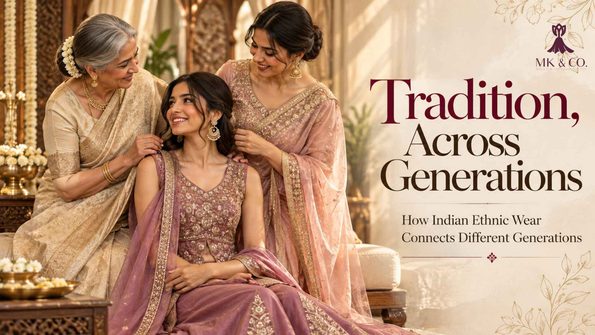
Fashion changes with time, but some styles continue to connect people across generations. A kurta worn by a grandparent, a traditional outfit chosen by a parent for a family celebration, or a contemporary ethnic ensemble worn by the younger generation may look different, yet each carries a connection to Indian clothing traditions.
Ethnicwear is more than a category of fashion. It reflects how traditions evolve, how personal preferences change, and how familiar styles find new meaning in different generations.
1. The Outfits We Remember
Many people associate traditional clothing with important moments in their lives. Family weddings, festivals, religious celebrations, and reunions often become memories connected with particular outfits.
Sometimes, it is a specific colour that stays in our minds. At other times, we remember intricate embroidery, a familiar print, or the way someone styled a dupatta.
These memories give clothing a meaning that goes beyond its appearance. An outfit may eventually be outgrown or replaced, but the occasion associated with it can remain memorable for years.
2. What Older Generations Valued
Traditional Indian clothing has long reflected regional craftsmanship, cultural practices, and the importance of special occasions.
Earlier generations often valued familiar silhouettes, detailed handwork, traditional fabrics, and garments that could be preserved and worn again. The significance of an outfit was not always connected to how new or fashionable it looked, but to its craftsmanship and the occasion for which it was chosen.
These preferences continue to influence the way many people appreciate ethnicwear today.
3. How Younger Generations Interpret Tradition
Younger generations often approach traditional clothing with a more experimental perspective.
They may pair classic kurtas with contemporary trousers, combine traditional embroidery with updated silhouettes, or style familiar ethnic ensembles with modern accessories.
Social media, changing lifestyles, and exposure to different fashion influences have also expanded the ways people discover and wear ethnic clothing.
Rather than abandoning tradition, many people are finding new ways to make it relevant to their own preferences.
4. The Same Tradition, Different Expressions
One of the most interesting aspects of ethnicwear is that a traditional design does not need to look exactly the same in every generation.
A classic silhouette can be updated through colour, sleeve design, neckline, or embroidery placement. Traditional motifs can be presented in fresh combinations, while familiar styles can be adapted for everyday wear.
These changes allow ethnicwear to evolve without losing every connection to its origins.
Tradition, after all, does not have to mean keeping everything unchanged. It can also mean carrying forward what matters while making space for new ideas.
5. Why Craftsmanship Still Matters
Even as styles change, craftsmanship remains an important part of the appeal of ethnicwear.
Embroidery, decorative borders, prints, and carefully considered finishing can give a garment its distinctive character. These elements often connect contemporary designs with techniques and aesthetics that have influenced Indian clothing for generations.
For customers, such details can make an outfit feel more personal. For designers and manufacturers, they offer opportunities to bring traditional inspiration into modern collections.
The challenge is to balance decorative appeal with wearability, quality, and the expectations of today’s customers.
6. Ethnicwear in Modern Everyday Life
Traditional clothing is no longer limited to weddings and major celebrations. Many people now choose ethnicwear for work, casual outings, family gatherings, and everyday routines.
Comfortable silhouettes, versatile colours, and easy styling have helped familiar designs fit into changing lifestyles.
This shift also creates opportunities to combine traditional and contemporary pieces. A simple kurta can be styled differently depending on the occasion, making ethnicwear more adaptable to modern wardrobes.
The result is a broader understanding of what traditional clothing can be and when it can be worn.
7. What This Means for the Future of Ethnic Fashion
The future of ethnicwear will likely continue to bring together heritage and experimentation.
Some customers will look for familiar designs that remind them of tradition. Others will prefer fresh colours, contemporary cuts, and distinctive styling. Many will want both: the cultural familiarity of ethnic clothing with the flexibility of modern fashion.
For retailers and manufacturers, understanding these different expectations is important when developing collections.
At MK & CO, the combination of traditional inspiration and contemporary design creates opportunities to serve a range of preferences while keeping Indian ethnicwear relevant to changing fashion needs.
Final Thoughts
Every generation brings its own ideas to fashion. Some traditions remain familiar, while others change through new designs, colours, and ways of styling.
Indian ethnicwear continues to connect these perspectives because it leaves room for both memory and reinvention.
The most meaningful part of tradition may not be wearing exactly what previous generations wore. It may be carrying forward the spirit of those styles while making them part of our own lives.
Explore MK & CO: https://mkandco.co/