

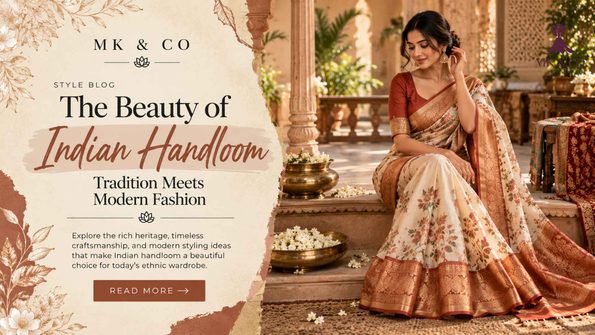
Indian handloom is more than a fashion choice. It represents generations of craftsmanship, regional artistry, and the beauty of fabrics created with patience and skill. From delicate woven patterns to rich textures and traditional motifs, handloom textiles carry a character that makes every outfit feel distinctive.
Today, these traditional fabrics continue to inspire contemporary ethnic fashion, offering beautiful options for women who appreciate both heritage and modern style.
1. Discover the Charm of Handloom Fabrics
Handloom textiles are valued for their distinctive textures, woven patterns, and artisanal character. Cotton, silk, linen, and other traditional fabrics offer different finishes, making them suitable for a variety of outfits and occasions.
Subtle irregularities in handwoven textiles can be part of their charm, reflecting the individual character of the weaving process.
2. Explore the Beauty of Traditional Weaves
India is home to many celebrated weaving traditions. Banarasi textiles are known for their intricate brocade work, Chanderi fabrics for their lightweight elegance, and Jamdani for its delicate woven motifs.
Different regions have developed their own techniques, patterns, and textile identities. Exploring these traditions can help you discover styles that feel meaningful as well as beautiful.
3. Bring Handloom into Everyday Ethnic Wear
Handloom-inspired fashion does not have to be reserved for special occasions. A simple woven kurta, a textured dupatta, or a cotton ethnic set can create a polished everyday look.
Pair these pieces with comfortable footwear and understated jewellery for an easy, elegant appearance. For a more festive feel, choose richer textures and decorative accessories.
4. Balance Traditional Fabrics with Modern Styling
One of the most appealing aspects of handloom fashion is its versatility. Traditional textiles can look contemporary when paired with modern silhouettes and thoughtful accessories.
Try a woven kurta with straight trousers, a traditional dupatta with a minimalist suit, or a handloom saree with contemporary jewellery. The contrast between heritage and modern details can create a distinctive look.
5. Choose Colours That Highlight the Fabric
Colour can enhance the beauty of a woven textile. Ivory, beige, indigo, earthy brown, and muted green create an understated appearance, while maroon, deep blue, mustard, and emerald can add richness.
Consider the weave and texture when choosing colours. Sometimes a simple shade allows the craftsmanship of the fabric to become the main attraction.
6. Care for Your Ethnic Fabrics Thoughtfully
Different textiles require different care. Always check the garment’s care label before washing or storing it.
Delicate silk and embellished fabrics may need professional cleaning, while some cotton garments can be washed gently according to their care instructions. Store clothing in a clean, dry place and avoid exposing delicate fabrics to prolonged direct sunlight.
Thoughtful care helps preserve the colour, texture, and appearance of your favourite pieces.
7. Make Craftsmanship Part of Your Personal Style
Choosing handloom-inspired fashion is an opportunity to appreciate the work behind a garment. Learning about its weave, texture, or regional origins can make your clothing choices more meaningful.
You can incorporate these pieces into your wardrobe gradually, mixing traditional textiles with contemporary designs to create combinations that reflect your individuality.
Conclusion
Indian handloom brings together craftsmanship, cultural heritage, and timeless beauty. Its distinctive textures and woven details offer endless inspiration for ethnic fashion, whether you prefer understated everyday outfits or elegant occasion wear.
By exploring traditional fabrics and styling them in your own way, you can celebrate the artistry of Indian textiles while creating a wardrobe that feels personal and enduring.
Discover ethnic fashion inspiration at MK & CO: https://mkandco.co